

Respect for People: The Lean Principle That Changes Everything
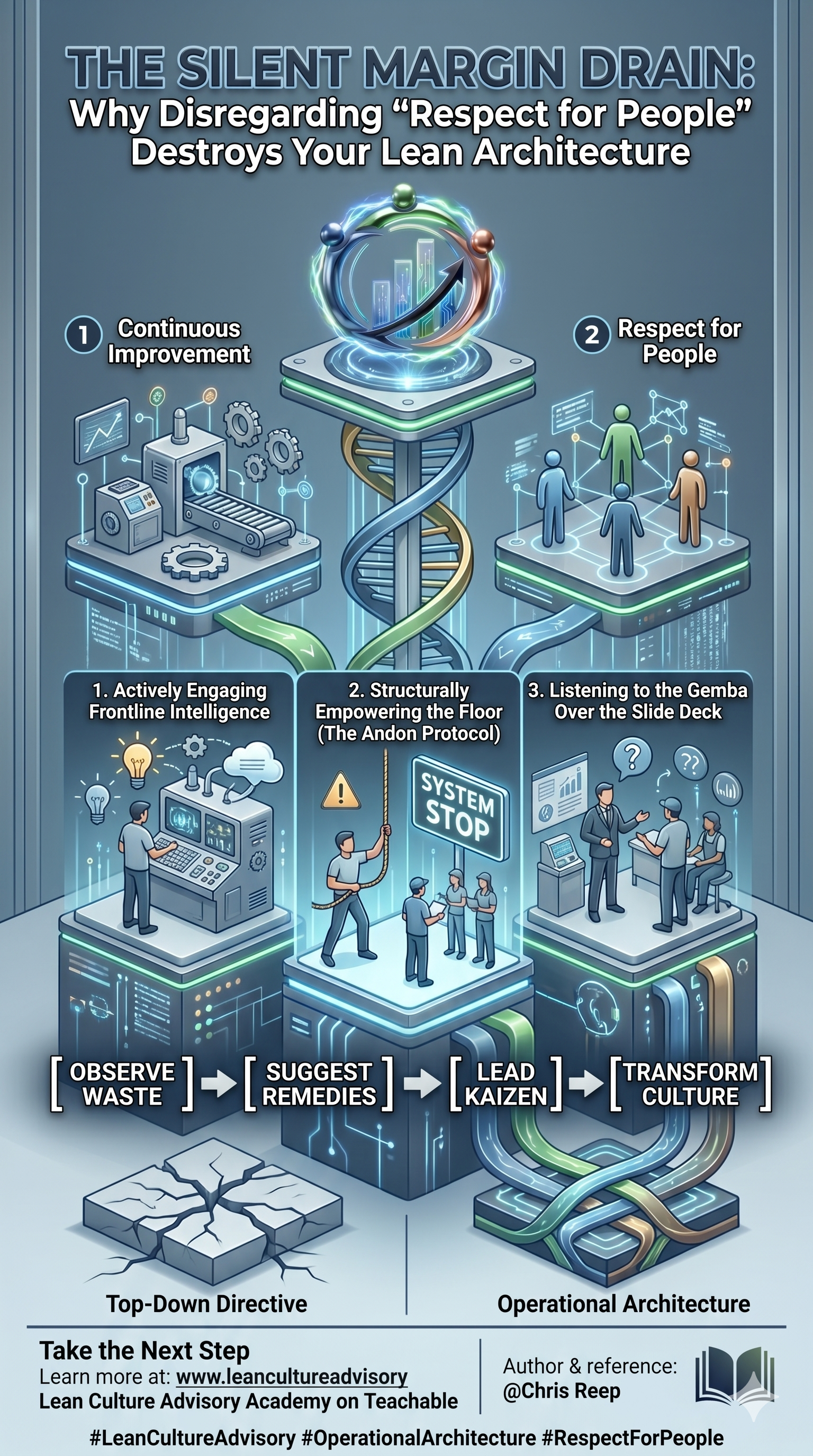
In the race to optimize manufacturing plants, heavy assembly lines, and offsite construction facilities, executives often obsess over the hard mechanics of Lean. They analyze layout configurations, enforce strict Work‑in‑Process (WIP) caps, chase higher OEE scores, and engineer complex scripts to shave seconds off cycle times.
Yet even after investing millions into Lean tools, automation, and continuous improvement programs, many organizations still suffer from:
high turnover
recurring quality defects
unstable flow
stagnant productivity
chronic value stream leakage
When a Lean transformation stalls, leadership typically blames a technical failure: an incomplete SOP, a missing software patch, or an uncalibrated machine. But beneath the corporate slide decks lies a far more uncomfortable truth.
Your Lean initiative didn’t fail because the layout was wrong. It failed because leadership treated Lean as a mechanism to extract labor, not as a system of human governance.
True Operational Architecture rests on two inseparable pillars:
Continuous Improvement
Respect for People
If you attempt to scale the first while ignoring the second, you are running Lean Theater—and it is silently draining your enterprise EBITDA.
The Corporate Lie: What “Respect for People” Actually Means
In most boardrooms, “Respect for People” has been watered down into a soft HR slogan. It becomes a poster on a breakroom wall or a checkbox on a corporate values list.
But in true Lean system governance, Respect for People is a hard operational strategy.
It recognizes a fundamental law of manufacturing:
The frontline operator is the only person in your facility who adds value to the product. Everyone else—supervisors, engineers, managers, consultants—is overhead whose purpose is to support that operator.
This is the structural difference:
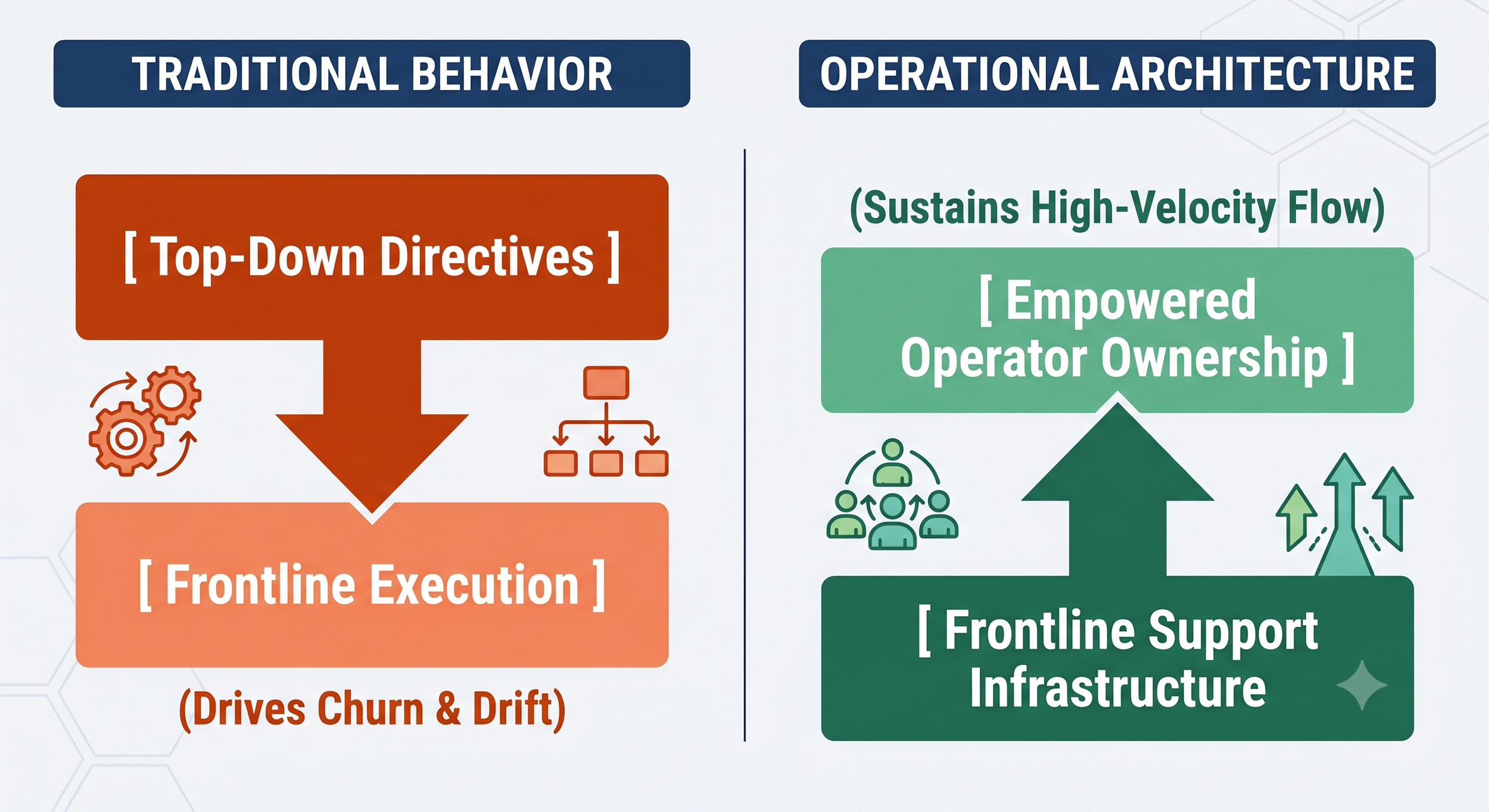
Respect does not mean avoiding accountability or tolerating poor performance. It means designing a workplace that honors human capability, values frontline intelligence, and structures the environment so operators can succeed without daily heroics.
The Three Structural Pillars of Human Governance
To move beyond tool deployment and build a high‑velocity value stream that sustains gains by design, leadership must hardwire respect into the floor through three operational mechanisms.
1. Actively Engaging Frontline Intelligence
Operators spend 8–12 hours next to the machines. They know:
which fixtures are wearing out
which material batches deviate from vendor specs
where layout constraints force wasted motion
which steps create ergonomic strain
where quality drift originates
Respect means replacing top‑down directives with structured suggestion systems and real‑time feedback loops. Operators must be treated as system guardians, not passive labor.
When an abnormality occurs, the system must encourage them to:
speak up immediately
flag the drift
participate in root‑cause analysis
help engineer the countermeasure
Fear destroys flow. Engagement accelerates it.
2. Structurally Empowering the Floor (The Andon Protocol)
Empowerment is not motivational talk. It is physical authority.
A world‑class Lean system includes a functional Andon escalation protocol. When an operator identifies:
a critical quality defect
an unsafe condition
an unstandardized workaround
a process drift
…they must have the absolute authority to stop the line.
Respect means leadership responds with:
urgency
engineering support
rapid problem containment
immediate countermeasure execution
Not frustration. Not blame. Not retaliation.
This is how you prevent defects from leaking downstream and protect both the operator and the value stream.
3. Listening to the Gemba Over the Slide Deck
If your understanding of plant performance comes from spreadsheets and monthly reports, you are disconnected from reality.
Respect for People requires leaders to:
leave the glass office
walk the Gemba daily
observe human motion
identify ergonomic strain
see where layout friction creates fatigue
coach in real time
Through Leader Standard Work (LSW) and routines like Toyota Kata, leaders become system auditors, not administrative spectators.
Shifting From Observers to Owners
A continuous improvement culture becomes self‑sustaining only when frontline personnel evolve from passive observers to active owners of their processes.
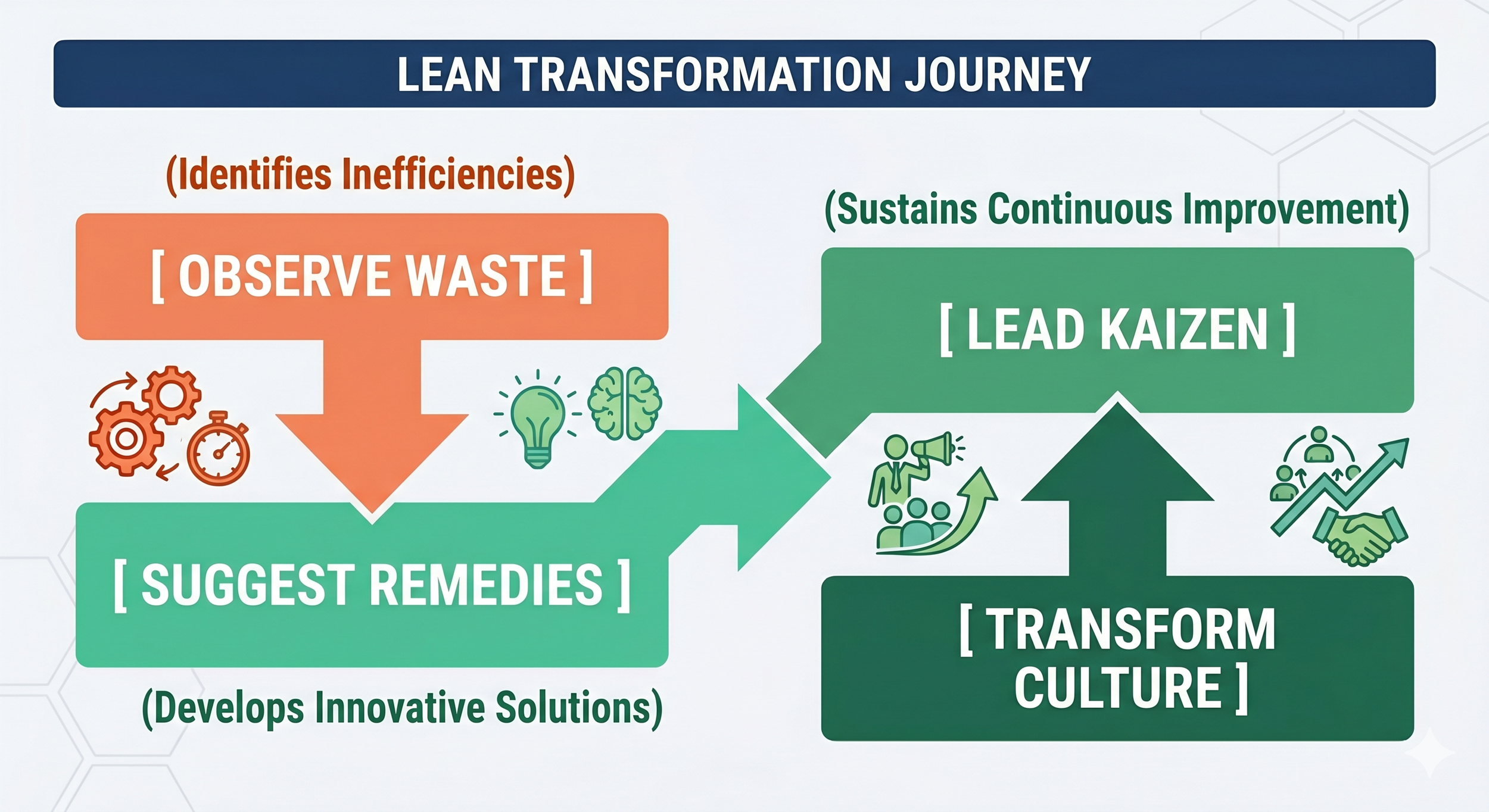
When operators help design the standard, they no longer resist it. They enforce it.
You stop forcing Lean tools onto a broken line. You start enabling an elite network of internal coaches who hunt micro‑wastes and optimize flow from the bottom up.
Stop Managing by Edict. Rebuild Your Human Architecture.
You cannot build a world‑class Lean operation on a foundation of:
disengaged people
exhausted operators
ignored frontline intelligence
High turnover, chronic quality escapes, and erratic cycle times are not operator failures. They are leadership and layout failures.
Respect for People is not optional. It is the structural backbone of Lean.
Take the Next Step in Your Operational Journey
Eliminate Value Stream Leakage
Partner with Lean Culture Advisory LLC to execute a rigid facility layout evaluation and build a governance framework that protects your frontline and your EBITDA.
Master System Governance
Train your supervisors, plant managers, and engineering teams in manufacturing physics and human‑centric operational excellence through the Lean Culture Advisory Academy on Teachable.
Access the Written Operations Manuals
Explore The True North Manifesto, The Operational Architecture Series, and more on Chris Reep’s Amazon Author Page.